Editor’s Note: This is one of a series of blog posts written by students in Professor Martin’s NAIS 400: Introduction to Native American and Indigenous Studies at the University of New Hampshire. To learn more about the Native American and Indigenous Studies minor, visit https://cola.unh.edu/interdisciplinary-studies/program/minor/native-american-indigenous-studies
By Andrew “Dewey” Bell ‘24
The New Hampshire climate ranges from warm summer rains to the vivid colors of autumn. However, one season more than the others presents its challenges: winter. Temperatures drop and foul weather rolls in. How does one learn to exist in this climate? For millennia the Indigenous peoples of the region built a lifestyle and developed technology around these conditions.
Any kid growing up in New Hampshire probably has a similar memory. They are playing in the snow, when all of a sudden, one of their legs goes deep down into the snow. If they are particularly unlucky, they lose their boot while pulling their foot out. This phenomenon is called post-holing, and can make travel in deep snow all but impossible. For Indigenous people, life did not stop when the snow fell. Wood needed to be gathered, nets checked, and snares set. So, the Abenaki people had their ôgemak. The French people who encountered this footwear technology called them raquettes, due to their resemblance to the equipment used in tennis. The English simply called them snowshoes. This technology allowed for movement through the landscape when otherwise impassible.
How did the Abenaki build snowshoes? While not a craftsperson myself, I have had the privilege of meeting Maine guides who are versed in their craft and have shown me their work bench. The first step is gathering the material for the frame. Strips of hardwood, ideally ash, are cut and then steamed or soaped in hot water. In larger scale workshops, molds exist but in essence, the strips are bent to the desired form and tied off with leather lacing. Braces are then attached to the top and bottom of the frame. This gives the snowshoe its form and location to attach the flotation material. Strips of leather rawhide called babiche are then woven in the frame. Spreading the body weight out over a larger surface area, allows for flotation on the snow. This is the general principle in all traditional snowshoe designs.
Here is where the anthropology nerd and the outdoor fanatic in me combine! I began to see the Indigenous names associated with certain shapes and styles of snowshoes, like the Ojibwe and the Huron. Beginning maintenance on my own snowshoes for the season, I wondered what styles of snowshoes were used by the Abenaki people? I found that in modern naming conventions, there is a popular style of snowshoe called the Huron or Algonquin. Knowing that the languages of the Indigenous peoples of this region are in the Algonquin language family, I wondered what shape of snowshoe was common among these language networks. Below is a modern snowshoe in the Algonquin style. It has an elongated tail, an oval frame, and an upturned toe. This general shape is a modern standardization of hundreds of years of traditional craft.
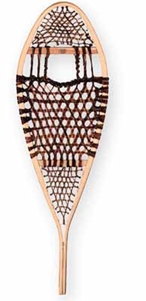
Figure 1: Modern production of Algonquin style snowshoe
I turned to museum collections to look for artifacts that displayed characteristics of historic snowshoes made by native craftsmen of the region. An extensive collection exists at the Penn Museum. In their journal, a 1911 article details their collection, as well as regional and Tribal styles. The article describes how its finest examples come from the Northern Algonquin and Hurons. It goes on to describe the style of snowshoe: “…in less mountainous territory dwell the river tribes, the Malisits of New Brunswick, the Penobscots of Maine and the Hurons and Abenakis of Quebec. The snowshoes of these tribes are longer, narrower, and have lengthened tail-pieces of trailers.” It also describes how although some of their more northern neighbors, like the North Athabascan Tribes, have upturned toes, the Abenaki and other Algonquin styles historically do not.
At the National Museum of the American Indian they have in their collection two sets of Abenaki-made snowshoes, both collected by A. Irving Hallowell in the 1920s. Both have the classic Algonquin shape, but with a flat toe, unlike modern Algonquin/Huron style snowshoes that have an upturned toe, like Arctic style snowshoes.
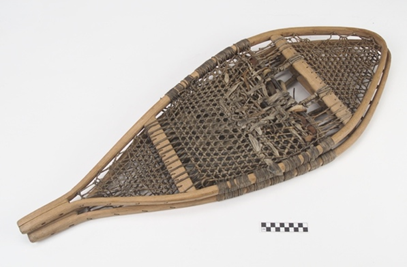
Figure 2: Abenaki snowshoes, 1923. (National Museum of the American Indian collection)
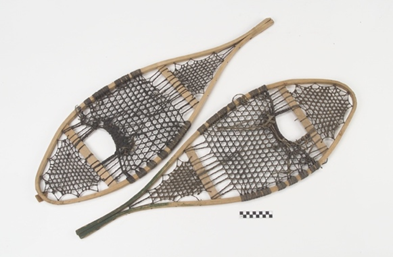
Figure 3: Abenaki snowshoes, 1924. (National Museum of the American Indian collection)
The most beautiful pair I found is at the Hood Museum at Dartmouth. The craftsperson who made these snowshoes was Nicolas Panadis. He lived at Odenak, Quebec, from 1850 to 1947. These are in the same shape and style as the ones found in the National Museum of the American Indian, but with more details. I believe that the white webbing in the center is one inch or larger lamp wick. These are used even today as bindings for snowshoes. The more interesting and unexplained addition is the red yarn protruding from where the babiche is tied to the frame.
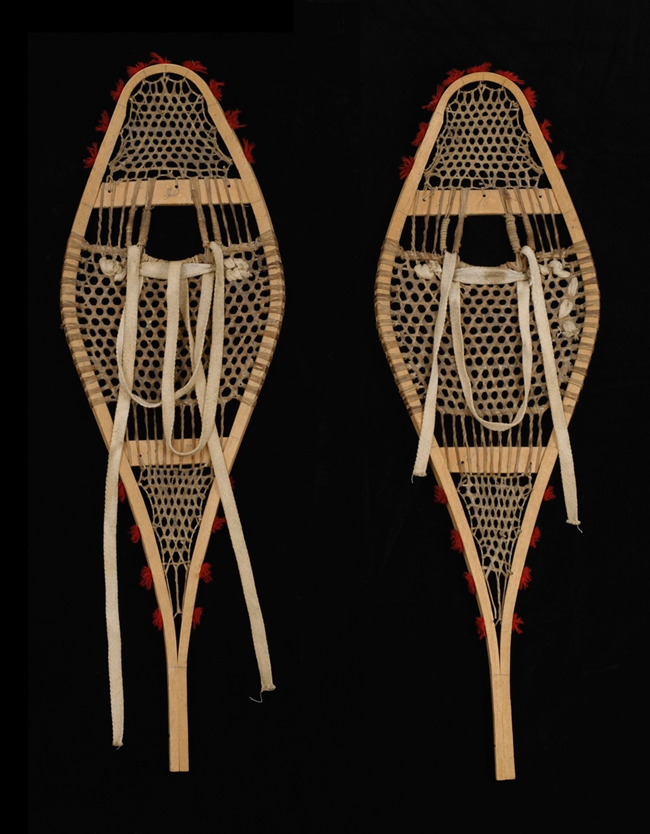
Figure 4: “Pair of Snowshoes” by Nicolas Panadis (Hood Museum of Art collection)
My mentor Tim Smith of Jack Mountain School of Bushcraft, is a professional outdoorsman of the Northern New England tradition, as well as an educator and an amateur historian. On top of this he tries his hand at snowshoe making now and then. The finest pair of shoes he has was made by a friend and also has the yarn decoration. Tim said they were made by a Cree man named David Bosum from Ouje-Bougoumou in Quebec. Tim was also curious about the yarn when he first saw David wearing a pair. David explained that was how he learned to do it and he always felt “it makes them look alive.”
While doing research, I also found a Cree legend relating to snowshoes. The documentary “Dab Iyiyuu” recounts the cultural teachings, traditions, and legends of the Cree told by Cree elders. One of those legends regards the snowshoe in Cree culture. It tells the story of a family: father, mother, and son. In the fall the first thing that this family does is make their snowshoes. The father attempts to teach his son how to make the snowshoes. He is dismissive. His mother asks him to help fix the net and the son refuses. The father again attempts to instruct his son on the matter of snowshoes. He tries to show the son how to carry his snowshoes crossed according to their traditions, tails facing out and crossed. When the son went out to hunt, he had them facing in and not crossed. The son never returned home from his hunt. This lesson teaches adolescents to follow the advice of their elders. In that vein, snowshoes teach all of us about Indigenous technologies and ways of knowing that they are still relevant today.
Works Cited
Abenaki [Odanak/St. Francis]. “Snowshoes.” 1923. National Museum of the American Indian, https://americanindian.si.edu/collections-search/objects/NMAI_134986. Accessed 19 Dec. 2022.
Abenaki [Odanak/St. Francis]. “Snowshoes.” 1924. National Museum of the American Indian, https://americanindian.si.edu/collections-search/objects/NMAI_141936. Accessed 19 Dec. 2022.
Panadis, Nicolas. “Pair of Snowshoes.” Circa 1925. Hood Museum of Art. https://www.naaer.hoodmuseum.dartmouth.edu/northeast-woodlands/tools-technology/work-3. Accessed 19 Dec. 2022.
“Snowshoes.” 1911. The Museum Journal, Volume II Number 4. Pp 82-94. https://www.penn.museum/sites/journal/184/. Accessed 19 Dec. 2022.
 Indigenous New Hampshire Collaborative Collective