By Jennifer Carr, Interim Executive Director for the American Independence Museum
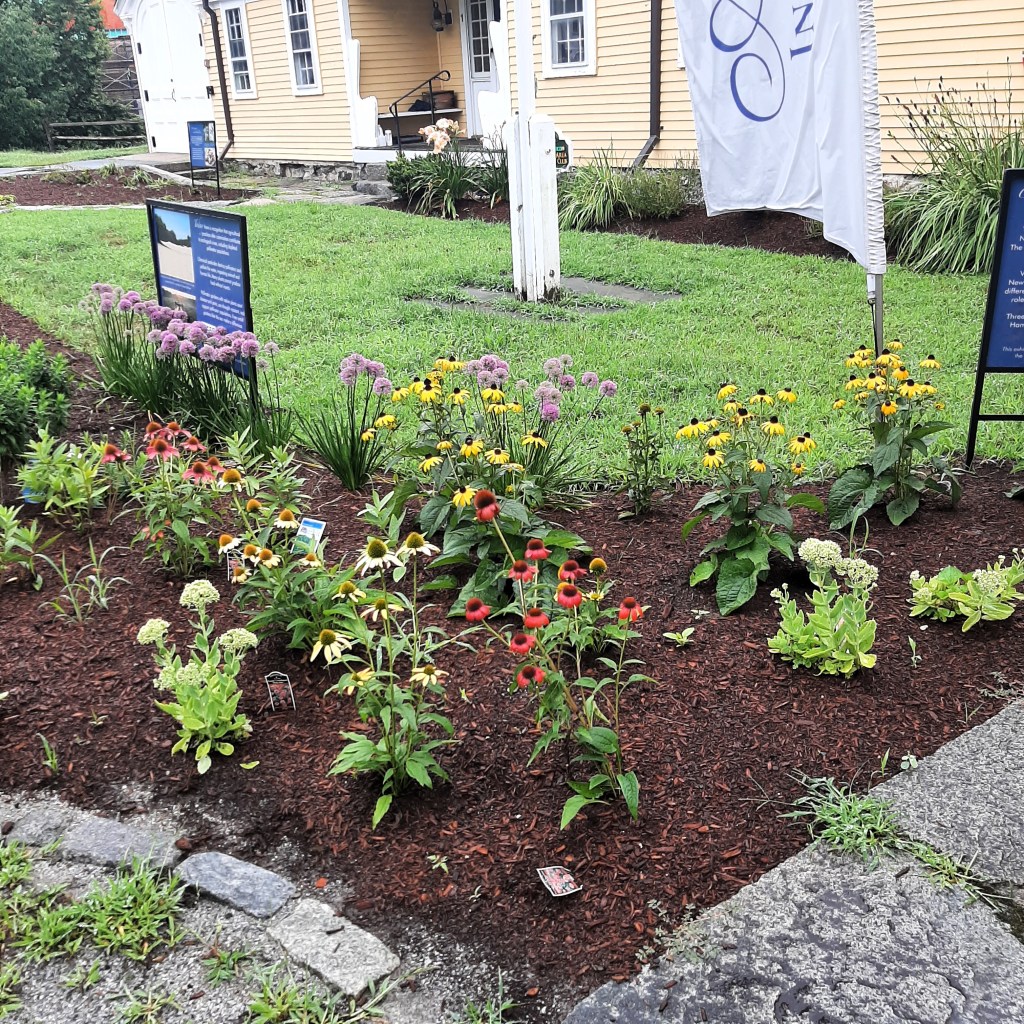
This summer the American Independence Museum (AIM) in Exeter, NH introduced an interpretive garden exhibit that explores changes in land use as the result of colonization. A collaboration between the museum, Paul and Denise Pouliot of the Cowasuck Band of the Pennacook-Abenaki People, INHCC member Ann Podlipny, and garden consultant Isabel Cole, the garden consists of three sections to be viewed as a living timeline in the history of our land. The first section represents Indigenous land use and includes native plants that were used for food, medicinal and ceremonial purposes. The second section represents an eighteenth-century kitchen garden common among Euro-American colonizers and includes plants that were used for culinary purposes. The third section is a contemporary pollinator garden that contains native plants that support the pollinator population.
Paul, Denise, Isabel and Ann were instrumental in providing recommendations for plants that would not only thrive in our environment, but would tell the important story of New Hampshire’s land and agricultural practices. Paul and Denise provided valuable insight to the Indigenous uses of the plants, and Ann helped plant the garden.

Currently, there are interpretive panels that provide broad introductory information about the garden, but AIM has plans to expand this living exhibit in the coming months. Forthcoming digital exhibits will enable guests to dive deeper into New Hampshire’s agricultural history, providing more information on specific plants, how agricultural practices among Indigenous peoples differed from those of colonizers, and contemporary efforts to educate on the importance of native plants and proper care for the land and our pollinators. AIM plans to make the garden a part of its educational programming, by giving students an opportunity to interact with the plants, taste and smell the food that is grown, and see for themselves the positive impact pollinator gardens have on their lives.
The garden is just beginning to take shape and AIM plans to add more plants in Spring 2025.
This project was funded through a generous grant from the Massachusetts Society of the Cincinnati and is part of AIM’s commitment to diverse and balanced history.
 Indigenous New Hampshire Collaborative Collective