INHCC would like to honor the memory of member, Mary Ellen Lepionka, who passed away in October 2024. She contacted us (INHCC) in 2021, when she introduced herself and the research work that she had been doing. Mary Ellen was working as an independent scholar on pre-colonial history in North Shore Massachusetts and the Merrimack Valley. She sought to highlight Indigenous voices and practices from this time period.
You can read more about Mary Ellen’s life and work in her obituary with the Gloucester Daily Times. Historic Ipswich also has a memorial and links to her work, and a book manuscript on the history of Cape Ann and Essex County more broadly is available at https://capeannhistory.org. We share here memories from INHCC members and how they came to know Mary Ellen.
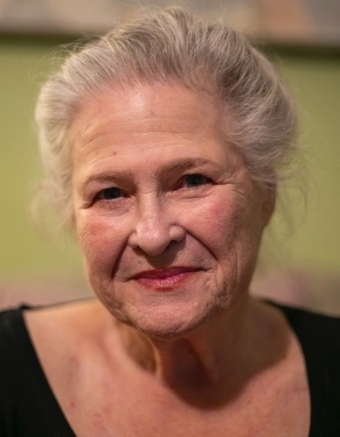
With respect, admiration, and gratitude for Mary Ellen Lepionka, below are some remininces from our members:
I learned about Mary Ellen and her work when I began researching the Indigenous history of the so -called research domain for the Plum Island Ecosystems Long Term Ecological project (PIE-LTER). This area includes the marshes, estuaries, and watersheds of 3 rivers that flow into Plum Island Sound in northeastern Massachusetts. I found Mary Ellen’s articles on the Historic Ipswich website, and began following some of the many references she included. I was searching for anything I could find to help me – books, websites – including looking online for Indigenous organizations.
I came across INHCC, contacted them and asked if I could attend a meeting and introduce the LTER – I thought some of our coastal and watershed research aligned with some of their projects. I had also become aware of the apparent gap between the two geographical areas (upper and lower Merrimack, really) in the treatment of the history, artificially created by state boundaries and despite the Merrimack being a central travel, trade, resource for the Pennacook; for example, at that time the INHCC story map stopped pretty much at the NH border, even though Plum Island was highlighted as an important village site. I was perplexed that I only rarely found Mary Ellen’s work cited in the books and other things I was reading.
So I asked INHCC if I could invite Mary Ellen to the meetings, and I cold-emailed Mary Ellen to introduce myself and find out if she would be interested. It was a pleasure to meet her; this was on Zoom, during COVID, and she was excited to get involved. I regret to say that I never got to meet Mary Ellen in person.
The group quickly came to understand the depth of Mary Ellen’s knowledge and she became involved in several of their projects, including filling in the story map to extend down to coastal MA. (I had tried to start that effort using Mary Ellen’s work, but now we had her!). I would like to recognize and express my deep gratitude to Mary Ellen, who through her extensive research and scholarship, made important contributions to understanding Indigenous history of Cape Ann and the lower Merrimack Valley region of Massachusetts/New Hampshire, and beyond. Mary Ellen was generous in sharing her work, and I hope to honor her legacy by further sharing her work and by continuing my own efforts to learn and embrace the Indigenous knowledge and full history of the Pawtucket-Pennacook homelands and all N’Dakinna
Jane Tucker
I have known Mary Ellen over the past two years through INHCC and the NAFSE Fire & Fire History Working Group. She made an impression from the start of our connection. She was deeply knowledgeable on pre-colonial history of Middlesex County, Massachusetts, where I was born and raised. Mary Ellen shared her work “Burning in the Woods” with both INHCC and our nascent Fire & Fire History working group community in spring 2023. Her careful explication of Contact-era Indigenous fire use from primary documents filled a knowledge gap for many of us, I think. She enthusiastically agreed to showcase this work for our Fire History online symposium in early 2024, which was well received. (Recording available here: https://www.youtube.com/watch?v=fU5aB7xztXU) Her thoughtfulness and diligence as a scholar was evident, and the generosity and collegiality central to her practice.
Mary Ellen was also part of a review manuscript project I have been leading on the fire history in the Gulf of Maine watershed this year. She often expressed gratitude for being included in our transdisciplinary group with INHCC leadership, academics, researchers, grad students, land managers, and practitioners, and how much she appreciated our generative discussions over Zoom. It wasn’t easy to share the news of her passing with these colleagues. Many expressed sadness at the news and shared their memories and appreciation. Comments included how much they had learned from her, her generous spirit, her clear passion for her scholarship. She left such a positive, unforgettable impression in a relatively short period of remote collaboration.
Katie Glover
I was familiar with Mary Ellen’s work before getting to know her personally. I was not only impressed by the quality of her research, but also that she was doing it as an independent researcher for the sake of her own understanding and to share with others. The pursuit of knowledge and the desire to share what I’ve learned with others is also what motivates me to do the work that I do.
The first time I met Mary Ellen in person was on a weekend when I drove down to her house in Gloucester. We spent hours and hours “geeking out” about our shared interest in the Indigenous heritage of N’dakinna, exchanging resources and providing mutual advice. It also turned out that we had the same alma mater (Boston University). From there, we frequently sent our writings to each other for feedback and constructive criticism. It takes a certain level of humility for a serious writer/researcher to say “critique me and don’t worry about how harsh it is,” let alone to someone like me who was over half her age. I still have some of her comments to incorporate into my research drafts.
Aside from her knowledge, I miss her humility, kindness, and dry New England humor. I also think she recognized that the torch needed to be passed to young archaeologists such as myself, and for that reason I will carry her memory as I continue to “spread the good word” about Indigenous history and archaeology in New England.
Hunter Stetz
From the moment that Mary Ellen introduced herself to INHCC we knew that an invaluable resource came into our Indigenous family. She was so warm, engaging, and quick to share her vast knowledge of our Pennacook-Abenaki homelands and our people. When we first met we had no idea about her vast research that resulted in numerous published studies and articles.
As she got to know us and the types of research that we were engaged in through INHCC, she shared more and more of her works with us. We quickly found that her research would be very important and supportive of our ongoing research on the Indigenous human past, forests and the watersheds of N’dakinna.
Before her passing, she reached out to us to give the Cowasuck Band library her personal book collection and publications that she had amassed. This gift included many out-of-print historical books and many regional archaeological society publications that we added to the Archaeological resources.
We will fondly miss her and her warm personality. She was truly a gifted person with vast Indigenous knowledge that she was quick to share – she was a wonderful educator and teacher.
Paul & Denise Pouliot
 Indigenous New Hampshire Collaborative Collective